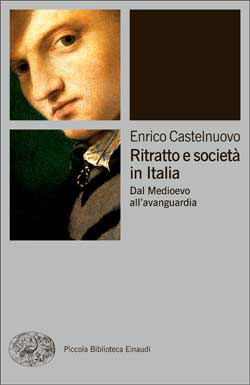
Ranging from Giotto to Boccioni, via Masaccio, Titian and Bernini, Enrico Castelnuovo tackles a central theme of art history, investigating the uses and functions of portraiture, its transformations according to the historical and social contexts in which it was employed, the way it was interpreted to respond to the demands of patrons and the expectations of the public, and the contribution made by the great masters to its evolution. Admirably associating rigor of analysis and didactic clarity, Castelnuovo explains how material, cut, and attributes contribute to constructing the image of the portrayed. From the moral and civic portraits of fifteenth-century Florence to Giorgione's piscological portraits, from Raphael's State portraits to the commoners depicted by the eighteenth-century Lombard masters, he highlights the fundamental junctures of a centuries-long history and restores the way contemporaries looked at and commented on these works.
“To finally get down to the heart of our topic it will be necessary to ask in what way the portrait is a characteristic element of Italian history, or rather how this history appears if we consider it from this point of view, very particular.”